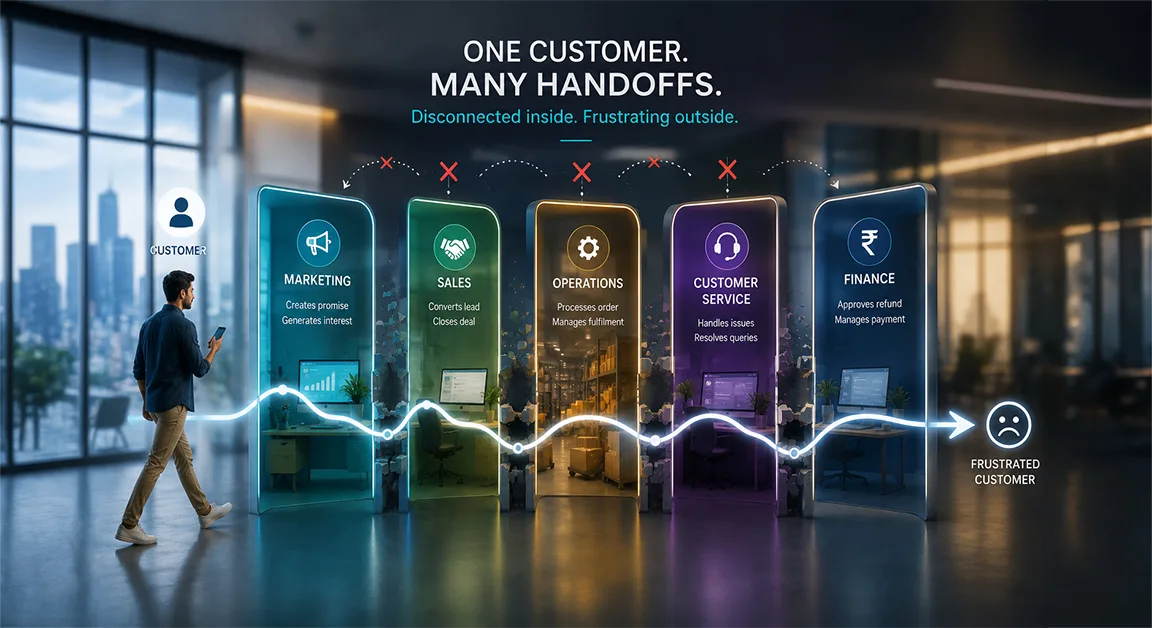


Customer experience (CX) is the sum of all the interactions a customer has with a brand, from the moment they discover it, to the moment they purchase, use, and recommend it. It is not just about providing good products or services, but also about creating emotional connections, building trust, anticipating needs, and improving retention. It is a key driver of brand loyalty.
Brand loyalty is beneficial for both customers and businesses. Customers enjoy consistent quality, value, and satisfaction, while businesses benefit from increased revenue, reduced costs, and positive word-of-mouth. However, brand loyalty is not easy to achieve or maintain. Customers have high expectations and are always seeking the next best thing. Brands need to work hard to meet and exceed those expectations and keep customers coming back for more.
To build brand loyalty through CX, brands need to focus on three key characteristics: perceived brand value, brand reputation, and customer satisfaction:
1. Perceived brand value:
Do your products or services provide competitive value in the market? Do you offer fair prices, discounts, rewards, or other incentives? Do you demonstrate your social and environmental responsibility?
2. Brand reputation:
How do customers perceive your brand? Do you have a consistent message across channels? Do you have a strong online presence and visibility? Do you have positive reviews and ratings?
3. Customer satisfaction:
How do customers feel about their interactions with your brand? Do you deliver a frictionless and personalized experience? Do you provide excellent customer care and service? Do you act on customer feedback?
Measuring customer loyalty is crucial for businesses to understand the effectiveness of their strategies and identify areas for improvement.
1. Net Promoter Score (NPS):
NPS is a metric that gauges customer satisfaction by asking customers how likely they are to recommend a brand to others. It provides insights into customer loyalty and helps identify brand advocates.
2. Repeat Purchase Rate (RPR):
RPR measures the percentage of customers who make repeat purchases from a brand. It indicates the level of customer loyalty and the effectiveness of retention strategies.
3. Upsell/Cross Sell:
The upsell ratio measures the success rate of upselling or cross-selling efforts. It reflects how receptive customers are to additional products or services, indicating their loyalty and trust in the brand.
4. Customer Lifetime Value (CLTV):
CLTV estimates the total revenue a business can expect from a customer over their lifetime. Higher CLTV indicates stronger customer loyalty and value.
5. Customer Loyalty Index (CLI):
CLI is a composite metric that combines multiple factors, such as customer satisfaction, retention rate, and advocacy, to provide an overall measure of customer loyalty.
To measure and improve customer experience and brand loyalty, brands need to collect and analyze data from various sources, such as surveys, reviews, social media, web analytics, etc. Brands must use the right tools and technologies to enhance customer experience and brand loyalty, such as artificial intelligence (AI), machine learning (ML), chatbots, voice assistants.
- Personalizing the customer’s journey based on their preferences, behavior, and feedback.
- Automating tasks and processes that are repetitive, time-consuming, or error prone.
- Providing faster and more accurate answers to customer queries and issues using chatbots, voice assistants, and natural language processing.
- Analyzing customer data and feedback to generate insights and recommendations for improving products, services, and experiences.
- Enhancing CX agent skills and performance by providing training, coaching, and guidance using AI and ML tools.